Build your scorecard
A scorecard is your quality checklist. It lists all the things you want to measure in a conversation and how important each one is.
Think of it like a grading rubric for conversations.
What goes in a scorecard
A scorecard contains:
- Quality areas — groups of related things to measure (e.g., "Customer Service", "Product Knowledge")
- Categories — the individual things you measure (e.g., "Was the agent polite?")
- Importance — how much each category matters in your overall score (e.g., is politeness worth 10% or 20%?)
Example scorecard
Name: Support Team Quality
Quality Areas:
-
Customer Service (40% of total score)
- Politeness (10%)
- Response time (15%)
- Empathy (15%)
-
Problem-solving (60% of total score)
- Issue resolved (35%)
- Follow-up provided (15%)
- Knowledge demonstrated (10%)
Create a scorecard
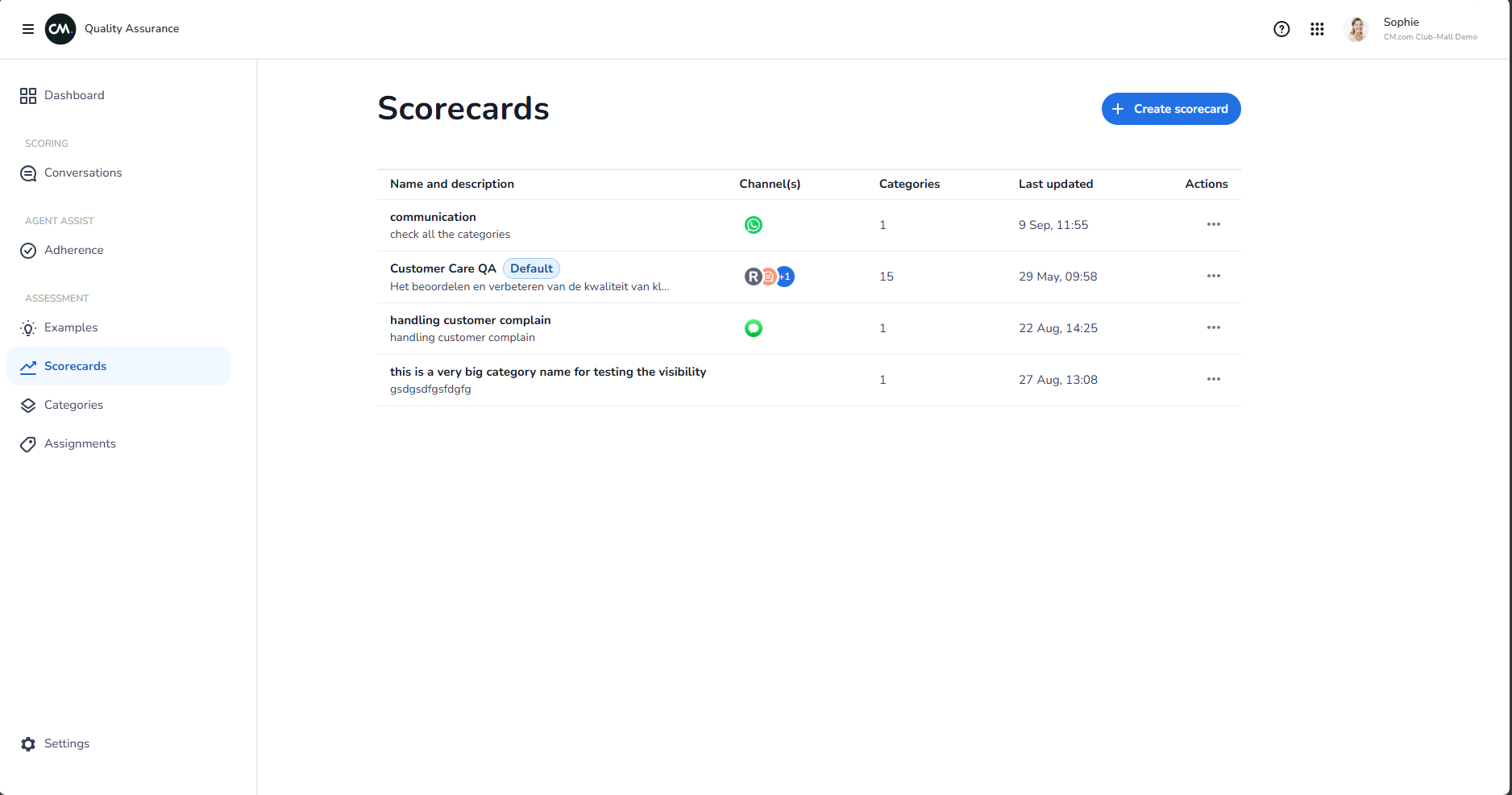
- Go to Scorecards in the left menu
- Click Create scorecard
- Give it a name (e.g., "Support Team Quality")
- (Optional) Add a description
Add quality areas and categories
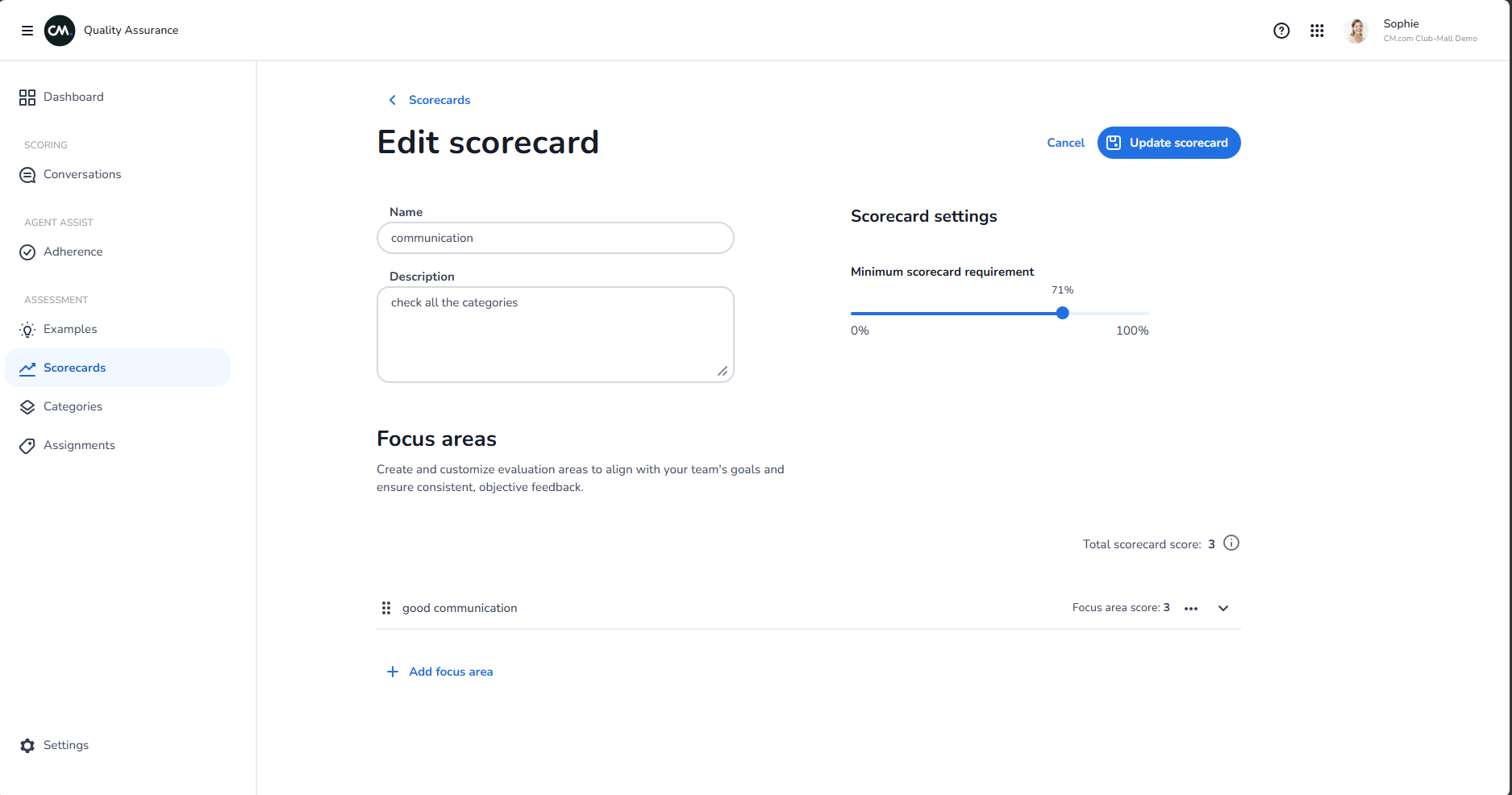
- In the scorecard builder, click Add quality area
- Give it a name (e.g., "Customer Service")
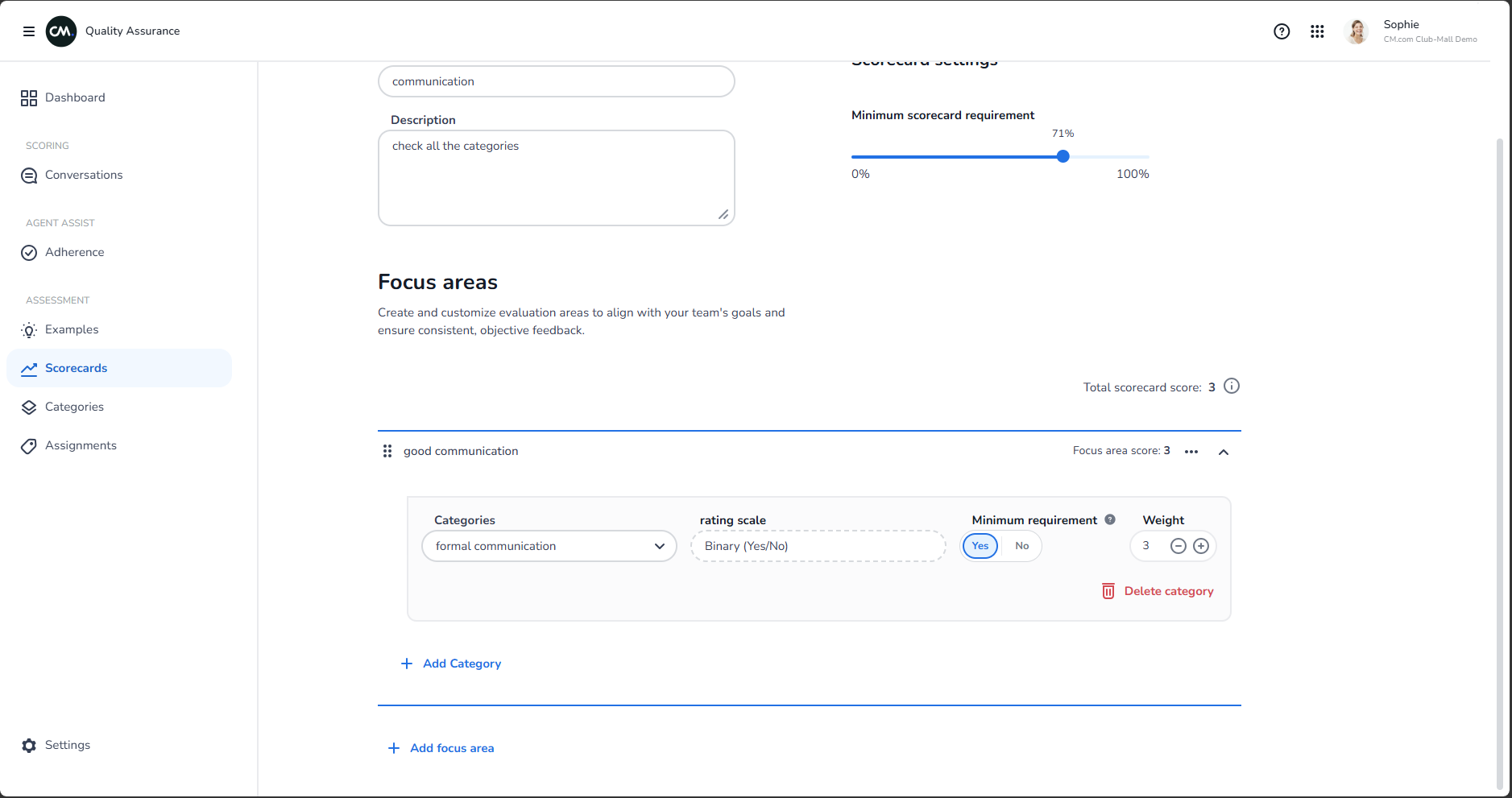
- Click Add category to add items to measure
- Pick from your existing categories
- Set how important this category is (the system auto-calculates total importance)
Set passing score (optional)
Set what score counts as "passing" — for example, 70% or higher is good, below 70% needs coaching.
Make it your default
Check Use as default scorecard if this is the quality standard for your whole team. This scorecard will be used for any channel or department that doesn't have its own scorecard.
Save your scorecard
Click Save. Your scorecard is now ready to use for scoring conversations.
Edit your scorecard
You can change your scorecard anytime — add new categories, adjust importance levels, etc.
Old conversations keep their original scores. Only new conversations will use the updated scorecard.
Tips
- Start simple with 5-7 categories (you can add more later)
- Make sure your importance levels add up to 100%
- Use the same categories across different scorecards when possible (makes comparison easier)
- Have different scorecards for different channels if they have different standards (e.g., email vs. chat)